Questions to Ask Your Heart Surgeon Before Surgery
Good surgeons expect questions, and the best ones welcome them. Patients who understand the plan tend to take part more fully and recover with less worry. Use this guide to get ready for your next visit.
Why your questions matter
A few minutes of asking can shape months of your life. Write them down ahead of time, since they are easy to forget in the moment.
Your questions also help keep you safe. Hospitals use checklists and a pause before surgery, called a time-out, to confirm who you are and what operation is planned. You are part of that system. Speak up if something does not match what you were told, a medicine looks different, your wristband name is wrong, or an allergy is missing. You are not a bother. You are helping.
Questions about the operation
Start with the basics. You want to know what will be done, why, and what success looks like.
- What exactly will you do, and what problem will it fix?
- What are my other choices, including no surgery, and why is surgery best for me?
- What does a good result look like, and how likely is it for me?
Questions about your personal risk
Every operation has risk, and you have a right to understand yours. It is fair to ask directly about your chance of not surviving, of stroke, or of a wound infection. You do not need to apologize for asking.
For common operations like bypass and valve surgery, surgeons often use a risk calculator from the Society of Thoracic Surgeons (STS). It uses details such as your age, heart function, and kidney function to estimate risk for someone like you. A 1 to 2 percent risk means that out of 100 similar people, about 98 or 99 would come through the operation. That number describes a group, not your personal outcome.
Remember that not having surgery carries risk too. Ask how the two compare.
- What are the main risks for me, given my health?
- What complications are most likely, and how do you prevent them?
- What is my estimated risk, and what is it based on?
Questions about experience and results
You can ask how often your surgeon does your exact operation and how the results compare. Skilled surgeons expect this. Most programs track their results through the STS, and you can look up a program's star rating at publicreporting.sts.org.
Some questions depend on your operation. For mitral valve surgery, ask how often the surgeon repairs the valve instead of replacing it. If a minimally invasive, robotic, or catheter-based option is on the table, ask about the surgeon's experience with it and which approach they recommend for you.
- How many of these operations do you do each year, and in total?
- How do your survival and complication rates compare with the national benchmark?
Questions about recovery, medicines, and follow-up
Surprises during recovery cause a lot of worry. Medicine changes and the first weeks at home are often more confusing than the operation. Ask at your visit, and again before you leave the hospital.
- How long will I be in the hospital, and how much of that in intensive care?
- When can I drive, work, lift, and resume intimacy?
- When does cardiac rehab start, and how do I join?
- Which medicines do I stop or keep taking before surgery?
- What new medicines will I take afterward, and do they need monitoring?
- Whom do I call with problems, and when is my first follow-up visit?
Making the most of a short visit
Rank your written questions so the most important ones come first, and tell your clinician at the start that you have a few key questions. Bring a family member or friend as an extra set of ears, and take notes. Ask before recording on your phone.
If time runs out, ask how to get the rest answered, such as through the patient portal or a nurse line. Unless it is an emergency, you can also ask for more time to decide or for a second opinion. A good team will help.
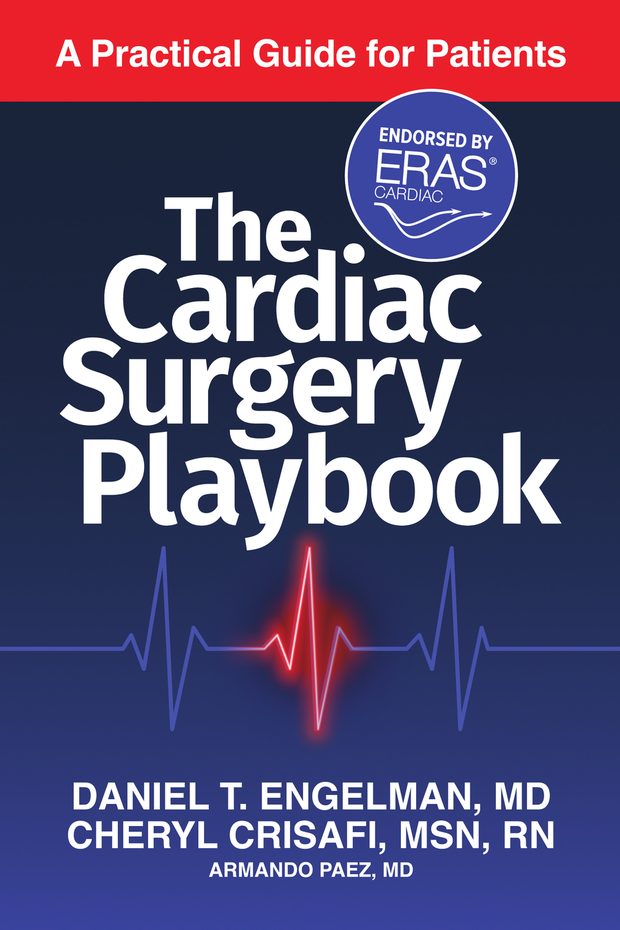
Learn more in The Cardiac Surgery Playbook
The Cardiac Surgery Playbook covers this in more depth in Chapter 11, What to Ask Your Surgeon and Team. It explains how risk estimates work, how to read the numbers, what to ask about your surgeon's results, and how to speak up for your own safety.
Common questions
What should I ask my heart surgeon before surgery?
Ask what the operation will do, what your other options are, what your personal risks are, how much experience the surgeon has with your operation, and what recovery will look like.
Is it okay to ask my surgeon how many operations they have done?
Yes. You have every right to know your surgeon's experience and results, and skilled surgeons expect the question.
What is the STS risk score?
It is an estimate from a Society of Thoracic Surgeons calculator. It combines your health details to estimate risks such as not surviving surgery, stroke, and deep wound infection for someone like you.
Can I get a second opinion before heart surgery?
Yes. Asking another surgeon or cardiologist to review your case is a normal part of deciding on a major operation, and a good team will help arrange it.
This page is general education, not medical advice. Your own surgeon and care team know your situation best. If you think you are having a medical emergency, call 911.